
Product Description
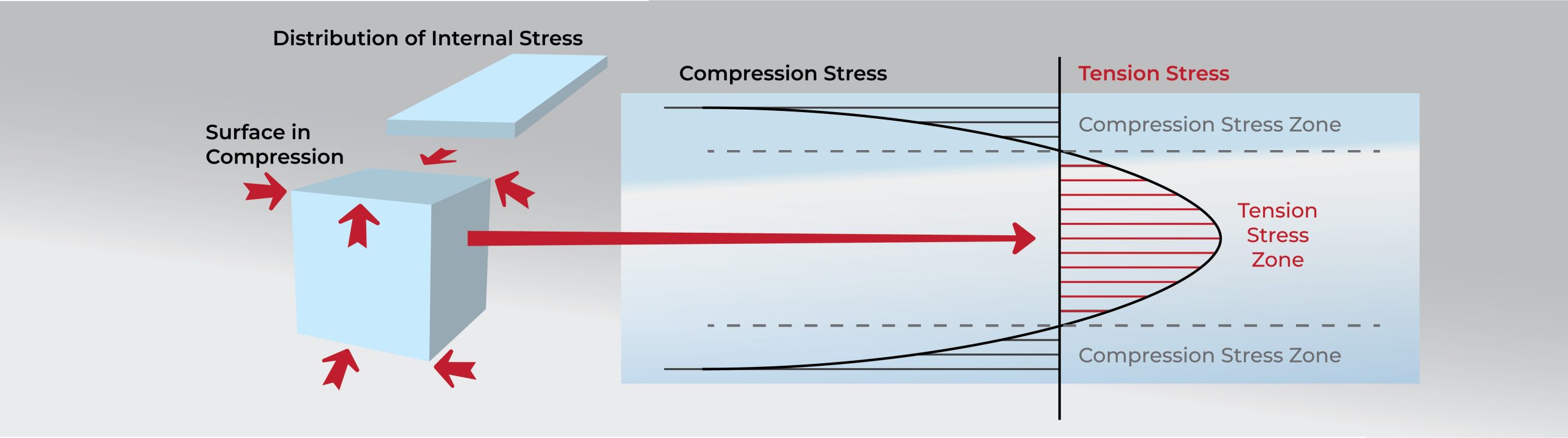
Nam Heng Safety Glass (NHG) Tempered Glass is produced by heating float glass near its softening point and rapidly cooling it, creating compressive stress on the surface and tensile stress inside, which reinforces its integrity. The advanced Landglass UltraJet Tempering line, featuring its cutting-edge Double Chamber Full Convection System, enables us to produce superior-quality safety glass for building applications.
We supply tempered glass ranging from 4mm to 19mm in thickness, available in normal clear glass, tinted glass, and Super Low-E glass, with sizes up to 3m x 12m.
Product Overview
|
Sizes:
(W) x (H)
|
Minimum: 300 x 300mm
Maximum: 3000 x 12000mm
|
|---|---|
| Thickness: |
4 - 19mm
*Subject to glass type and thickness.
|
Specification
| Safety Glazing: | Complies with building codes for high-traffic and public areas. |
|---|---|
| Glass Entrances and Storefronts: | Provides durability and style for commercial spaces. |
| Extreme Load Resistance: | Ideal for structural applications like glass floors and curtain walls. |
Characteristic
| What is Tempered Glass? | Tempered glass is safety glass strengthened through heat treatment to withstand impact and thermal stress. |
|---|---|
| Why Tempered Glass? | Nam Heng Safety Glass (NHG) Tempered Glass is four to five times stronger than annealed glass, making it suitable for transportation and architectural applications. Its balanced internal stresses cause the glass to break into small, harmless ‘chunks’ instead of sharp, jagged shards, thereby enhancing safety. |
| How is Tempered Glass made? | Heated and rapidly cooled using advanced tempering technology to enhance strength. |
Ideal for/ Product Application
| Curtain Walls: | High-rise building facades. |
|---|---|
| Balustrades: | Staircases and balconies. |
| Shop Fronts: | Retail store displays. |
| Windows: | Residential and commercial buildings. |
| Showcases: | Product displays in shops and museums. |
| Greenhouses: | Agricultural and botanical uses. |
| Escalator Side Panels: | Shopping centres and transport hubs. |
| Frameless Glass Doors: | Fire-rated emergency exits. |
| Tabletops and Furniture: | Provides a heat-resistant surface. |
| Building Facades: | Used in exterior walls of buildings. |
| Skylights: | Ideal for allowing natural light into spaces. |
| Shower Enclosure: | Suitable for creating durable and stylish shower areas. |
Performance Features
| Pre-Tempering Requirements: | Tempered glass cannot be cut, sanded, or bent after tempering. All dimensions and specifications must be determined before the process. |
|---|---|
| Damage Response: | Minor damage doesn’t immediately weaken tempered glass, but deep scratches can lead to breakage over time. |
| Breakage Characteristics: | When broken, tempered glass crumbles into small blunt pieces instead of sharp, shards, minimising risk of injuries. |
| Withstands High Temperature Differentials: | Can tolerate temperatures up to 250-300°C, making it suitable for environments with significant thermal stress, such as sun- exposed windows and doors. |
| Impact Resistance: | Capable of enduring higher impacts than regular glass, making it ideal for storefronts, doors, and glass partitions that are often subjected to sudden or heavy forces. |
| Durability and Longetivity: | Offers better resistance to scratches and abrasion, ensuring a longer-lasting, visually appealing surface. |
| Durability in Harsh Environment: | Better resistance to UV rays, chemicals, and environmental factors, making it ideal for outdoor and chemically exposed settings. |
| Breakway Feature: | Tempered glass breaks quickly and safely without causing injury, making it ideal for fire exits. |
Compliance(s)
| Industry Standards: | ASTM C1048: “Standard Specification for Heat Treated Flat Glass - Kind HS, Kind FT Coated and Uncoated Glass”. |
|---|